
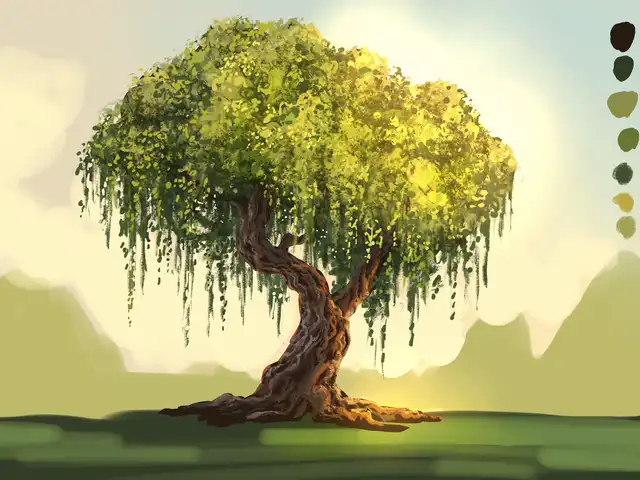
Tree drawing 🌲
Drawing trees is a fundamental skill in art that helps artists capture nature's beauty and improve their overall drawing abilities. Whether you're a beginner or experienced artist, mastering tree drawing involves understanding different tree structures, leaf patterns, shading techniques, and perspective. To start, focus on the tree trunk and branches. Trunks can vary in thickness and texture, often featuring irregular bark patterns that add realism to your drawing. Use light pencil strokes to outline the shape before adding details. Branches typically taper as they extend from the trunk, and they follow a natural, organic growth pattern rather than uniform angles. Leaves are crucial for bringing life to your tree drawing. Depending on the tree type, leaves can be clustered, spread out, or layered. When drawing foliage, consider using clustered strokes or scribbles to represent leaves instead of drawing each one individually. This approach saves time while maintaining texture and volume. Shading is vital to give depth and dimension. Use different shading techniques such as hatching, cross-hatching, or stippling to depict shadows and highlights on both the trunk and leaves. Light source awareness is essential to apply shading correctly. For materials, sketching pencils ranging from HB to 6B are recommended for defining lines and shading. The mention of "Tombow Mk" in the OCR content refers to Tombow’s art supplies, known for high-quality crafting pens and markers that can be excellent for outlining and adding final touches. Additionally, practicing drawing trees from reference photos or nature outings enhances observation skills and helps understand diverse tree species and environments. Combining these methods with regular practice will surely improve your tree drawing skills and artistic confidence.




Excellent !